
Gum disease rarely announces itself. It develops slowly, fed by routines so familiar they go unquestioned — the way someone brushes, what they drink throughout the day, even how they breathe at night. By the time symptoms become obvious, the damage has often been building for months or years. Understanding which everyday habits are doing the most harm, and why, gives readers a genuine opportunity to change course before serious intervention becomes necessary.
The Brushing Mistakes Most People Never Correct
Brushing twice a day is standard advice, but technique matters far more than frequency alone. Scrubbing back and forth with firm pressure is one of the most persistent errors in oral hygiene — it strips away the gum margin over time, exposing root surfaces and triggering recession that cannot be reversed without clinical help. The damage is cumulative and silent, which is exactly why so many people never connect the habit to the outcome.
Angle is the other overlooked variable. Holding the brush flat against the teeth cleans the enamel surface but misses the sulcus — the tiny groove where the gum meets the tooth. That space is where bacterial biofilm accumulates and inflammation begins. Dentists consistently recommend holding the brush at a 45-degree angle to the gumline, using short circular or vibrating strokes rather than horizontal scrubbing.
Toothbrush choice reinforces or undermines all of this. A medium or hard-bristled brush causes mechanical damage even with good technique. The American Dental Association recommends soft or extra-soft bristles for this reason. Electric toothbrushes with pressure sensors offer a practical advantage here — they alert users when they are pressing too hard, removing guesswork from a habit that most people never consciously think about.
- Switch to a soft-bristled brush or an electric model with a built-in pressure sensor to eliminate overaggressive scrubbing.
- Brush for a full 2 minutes, dividing the mouth into four quadrants of 30 seconds each to avoid rushing any section.
- Replace your toothbrush or brush head every 3 months, or sooner if bristles are visibly frayed, since worn bristles clean less effectively and concentrate pressure unevenly.
What You Eat and Drink Between Meals

Meal timing affects gum health in ways most people underestimate. The concern is not only sugar content but acid exposure frequency. Each time the mouth encounters fermentable carbohydrates — bread, crackers, fruit, sweetened beverages — oral bacteria produce acid as a byproduct. That acid irritates gum tissue and shifts the bacterial balance toward more aggressive, inflammation-promoting species. A single sugary snack is less damaging than ten small exposures spread across the day, because the mouth needs time to recover its neutral pH between acid challenges.
Frequent sipping of coffee, wine, sports drinks, or flavored water keeps the oral environment acidic for extended periods. Still water is the only beverage that actively helps — it rinses debris, maintains saliva flow, and does not contribute to the acid cycle. Saliva itself is a critical protective factor: it neutralizes acid, contains antimicrobial proteins, and delivers minerals that help maintain tissue health. Anything that suppresses saliva production — alcohol, certain antihistamines, antidepressants, and diuretics — reduces this natural defense and increases vulnerability to gum inflammation.
Nutritional deficiencies quietly worsen gum resilience too. Low vitamin C intake has a well-documented relationship with gum tissue integrity, affecting collagen synthesis and the gum’s ability to resist and repair injury. This does not require clinical deficiency to matter — chronically low intake, common in people whose diets are heavy in processed food, leaves gum tissue less able to respond to the bacterial challenge it faces every day.
Stress, Sleep, and Systemic Factors That Dentists Often Raise Last
Gum health does not exist in isolation from the rest of the body. Chronic stress elevates cortisol, which suppresses immune function and reduces the body’s ability to manage bacterial infection in the gums. Research in periodontology has consistently identified psychological stress as a contributing factor in the progression of periodontal disease — not because stress causes the bacteria, but because it impairs the host response that would otherwise keep inflammation in check.
Sleep deprivation compounds this effect. Poor sleep is associated with systemic inflammation, and the gums are not exempt from that pattern. Mouth breathing during sleep — whether from congestion, habit, or anatomical factors — dries the oral tissues overnight, reduces saliva’s protective action, and creates conditions where harmful bacterial colonies establish themselves more easily.
Smoking remains the single most damaging lifestyle factor for gum health, and it is worth stating plainly: it suppresses bleeding as a warning sign, meaning gum disease in smokers often goes undetected longer because the characteristic early symptom is masked. The absence of bleeding is frequently mistaken for health when the opposite is true.
For patients where gum disease has already taken hold despite behavioral changes, clinical options range from scaling and root planing to laser gum therapy, which uses targeted light energy to remove diseased tissue with greater precision than traditional instruments and promotes faster healing.
- If you take prescription medications that list dry mouth as a side effect, discuss saliva substitutes or dosing timing with your physician — dry oral tissue is measurably more susceptible to periodontal infection.
- Aim for 7 to 9 hours of sleep per night; if mouth breathing is disrupting sleep quality, a dentist can screen for airway issues at your next appointment.
- Track gum bleeding honestly — if bleeding persists for more than 2 weeks after improving your brushing technique, treat it as a clinical signal rather than a normal occurrence.
The Flossing Gap and What Actually Replaces It
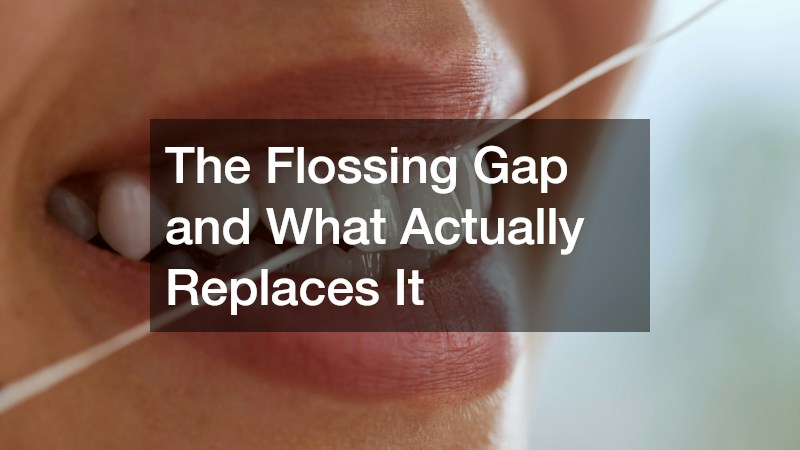
Interdental cleaning is where the most significant behavioral gap exists. Toothbrush bristles reach roughly 60% of tooth surfaces, leaving the tight contacts between teeth — where gum disease most often begins — largely untouched. Traditional floss remains effective when used correctly, but compliance is low, and incorrect technique (snapping floss aggressively into the gumline) causes more trauma than benefit.
The practical alternatives are worth understanding clearly. Water flossers disrupt biofilm in the interdental spaces and are particularly useful for people with fixed bridges, orthodontic appliances, or dexterity limitations. They do not replace floss entirely but perform comparably for many patients when used consistently at adequate pressure settings. Interdental brushes — small cylindrical brushes sized to fit specific gaps — offer direct mechanical cleaning and are favored in periodontal maintenance programs because of their contact with the root surface.
The comparison that matters is not floss versus water flosser. It is daily interdental cleaning versus none at all. Any method used consistently will outperform the perfect method used occasionally.
- Use interdental brushes sized to fit each gap without forcing — if resistance is high, try the next size down rather than pressing harder.
- Set a single consistent trigger for flossing, such as immediately after evening brushing, to build automaticity rather than relying on motivation.
- If standard floss causes bleeding in more than two or three locations consistently, raise this at your next dental appointment as a symptom rather than dismissing it as technique error.
Changing Habits Before They Change Your Gums
The most important shift is recognizing gum health as a daily maintenance problem rather than a periodic dental appointment outcome. Appointments matter, but they account for a few hours per year. Everything else happens at home, across thousands of small decisions about technique, timing, food, and sleep. The habits outlined here do not require expensive products or dramatic lifestyle overhauls — they require accuracy and consistency. Starting with one corrected habit, practicing it until it is automatic, and then adding the next is a more reliable path than attempting wholesale change.
About the Author