
You brush faithfully, show up for every adjustment, and still your orthodontist mentions your treatment is taking longer than expected. Often the hidden culprit isn’t your bracket placement or wire schedule at all, it’s the health of your gums. Inflamed or infected gum tissue can undermine tooth movement in ways most patients never anticipate. Understanding this connection can help you protect both your smile timeline and your long-term oral health.
Why Inflamed Gums Interfere With Tooth Movement
Orthodontic treatment works by applying steady pressure that encourages bone to remodel around the tooth roots, allowing teeth to shift into new positions. When gums are inflamed, the surrounding bone and ligament tissue become compromised, and that remodeling process slows considerably. Swollen tissue also makes it harder for orthodontists to gauge how teeth are actually moving, sometimes leading to longer intervals between adjustments. In more advanced cases, inflammation can even cause slight bone loss, which changes how a tooth responds to the same amount of pressure that once moved it predictably.
This is why orthodontists routinely check gum condition at every visit, not just the wires and brackets. A patient with healthy gums typically sees more consistent, predictable progress from one appointment to the next.
Recognizing Early Signs of Gum Trouble Under Braces
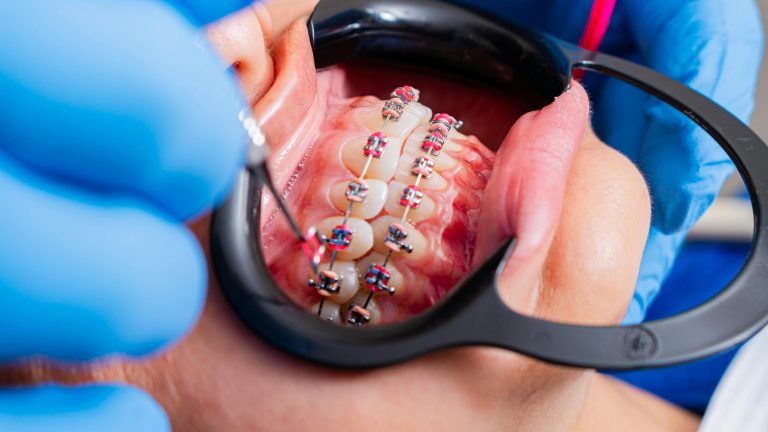
Braces create more surfaces for plaque to hide behind, which makes early detection of gum issues trickier than usual. Many patients assume a little bleeding during brushing is normal and ignore it, but that bleeding is often the first sign of gingivitis setting in. Catching these signs early can prevent a minor issue from turning into a treatment delay.
- Gums that look puffy, shiny, or noticeably redder than the rest of your mouth
- Bleeding when brushing or flossing around the brackets
- Persistent bad breath that doesn’t improve with brushing
- Gums that seem to be growing up and over the brackets
- Tenderness or soreness that lingers beyond a few days after an adjustment
Building a Brace-Friendly Daily Cleaning Routine

Standard brushing techniques often miss the tight spaces around brackets and under wires, which is exactly where plaque likes to accumulate. A more deliberate approach, angling the brush toward the gumline and spending extra time on each tooth, makes a measurable difference. Interdental brushes and floss threaders are worth the extra few minutes they take, since they reach areas a regular toothbrush simply cannot.
Consistency matters more than intensity here. A gentle, thorough routine done twice a day will protect gum tissue far better than an aggressive scrub done once in a while.
- Use a soft-bristled or orthodontic toothbrush designed for brackets and wires
- Try a water flosser to dislodge debris between teeth and along the gumline
- Rinse with an antimicrobial mouthwash if recommended by your dentist
- Replace your toothbrush more often, since bristles wear out faster around hardware
- Schedule cleanings with your general dentist alongside your orthodontic visits
Diet Choices That Support Healthier Gum Tissue
What you eat plays a bigger role in gum health than most patients realize, especially during orthodontic treatment when tissue is already under some strain. Sugary snacks and sticky foods feed the bacteria that cause inflammation, while foods high in vitamin C and calcium help support tissue repair and stronger bone density. Staying hydrated also matters, since saliva naturally helps wash away food particles and buffer harmful acids throughout the day.
Small adjustments to your snacking habits can add up over the course of a multi-year treatment plan. Choosing water over soda and reaching for fruit instead of candy are simple habits that protect both your gums and your progress.
When Professional Gum Treatment Becomes Necessary
Sometimes brushing and flossing improvements aren’t enough to reverse gum inflammation, particularly if plaque has hardened into tartar below the gumline. Once tartar forms, no amount of at-home care can remove it, since it bonds firmly to the tooth surface and creates a rough haven for bacteria to keep multiplying. In these cases, a dentist may recommend a deeper cleaning or a more targeted treatment to calm the tissue before orthodontic progress can resume normally. Scaling and root planing is often the first line of professional treatment, involving a thorough cleaning below the gumline to remove tartar and smooth the tooth roots so gums can reattach properly. This may require one or two visits, sometimes with a local anesthetic if the inflammation is significant, and many patients notice reduced swelling and bleeding within a week or two. If the gum disease is more advanced or isn’t responding to standard cleanings, one option some periodontists offer is laser gum therapy, which uses focused light energy to remove infected tissue and reduce harmful bacteria with minimal discomfort compared to traditional scalpel-based procedures. Laser gum therapy also tends to promote faster healing and less bleeding, which matters for orthodontic patients who need their gums stable enough to tolerate ongoing adjustments. Your orthodontist and dentist may need to coordinate care during this process, sometimes pausing wire tightening or aligner changes for a few weeks so the gum tissue has a chance to recover. Skipping this step, or trying to push through treatment while the gums are actively infected, can lead to more serious complications like bone loss around the teeth—something far more disruptive to your smile goals than a temporary delay.
When gum inflammation persists despite consistent brushing, flossing, and antimicrobial rinses, your orthodontist may recommend a referral to a periodontist for professional intervention. This step usually becomes necessary when pocket depths exceed 4-5 millimeters, bleeding continues for more than two to three weeks, or gum tissue has started to overgrow around the brackets. Waiting too long to address these signs can stall tooth movement for months, so earlier evaluation tends to produce better outcomes. Laser gum therapy has become a preferred option for many orthodontic patients because it targets inflamed or overgrown tissue with minimal bleeding and less discomfort than traditional scalpel-based procedures. Patients who undergo this treatment often notice reduced swelling and bleeding within just a few weeks, allowing their orthodontist to resume more aggressive tooth movement sooner. The precision of the laser also reduces damage to surrounding healthy tissue, which is particularly valuable when working around brackets and wires. Recovery tends to be quicker than older surgical techniques, with many people returning to their normal oral care routine within days rather than weeks. Mild sensitivity or slight tenderness is common immediately afterward, but it typically resolves quickly with over-the-counter pain relief if needed. Some patients require only a single session, while more advanced cases of gum overgrowth may call for a follow-up treatment a few weeks later. Discussing this option with both your dentist and orthodontist ensures the treatment plan stays coordinated rather than working at cross purposes. Sharing progress notes between providers also helps determine the right time to adjust wires or resume more forceful movements once the gums have stabilized.
Working With Your Orthodontist to Stay on Schedule
Open communication between you, your dentist, and your orthodontist is one of the most underrated tools for keeping treatment on track. If your orthodontist notices signs of gum irritation, they may pause certain adjustments or ease up on wire tension until the tissue calms down. Sharing any changes you notice at home, even small ones, gives your care team the chance to intervene before a minor problem becomes a major delay.
- Mention any bleeding, swelling, or soreness at every appointment, even if it seems minor
- Ask whether your adjustment schedule needs to slow down during periods of gum sensitivity
- Request a referral to a periodontist if inflammation persists despite better home care
- Keep a shared record of gum health notes between your general dentist and orthodontist
Gum health and orthodontic progress are far more connected than most patients expect, and small daily habits can make the difference between a smooth treatment timeline and a frustrating delay. Paying attention to early warning signs, refining your cleaning routine, and staying in close communication with your dental team all help protect the investment you’ve made in your smile. If you notice persistent redness, bleeding, or swelling, don’t wait for your next scheduled visit to bring it up. Addressing gum concerns promptly keeps your treatment moving forward and helps you reach your final result on schedule.
About the Author